Istoric (engleză)
HODOS – BODROG SAINT MONASTERY (Short History)
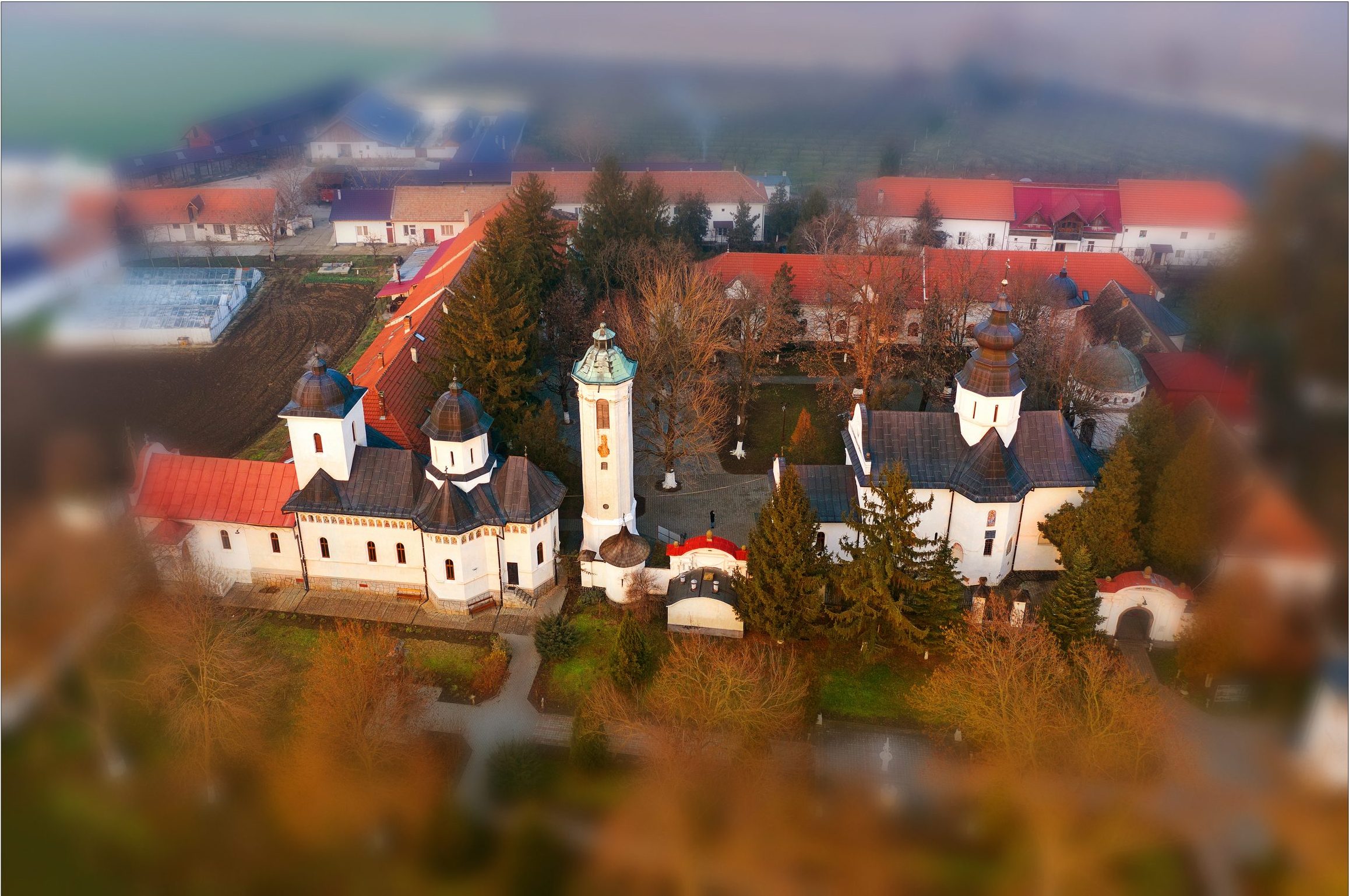
The Hodos – Bodrog monastery is one of the oldest monastic settlements in our country. It is situated at a distance of 15 km from Arad city, on the inferior course of Mureș.
According to an old local tradition, the monastery was founded by the surrounding believers. The tradition says that a bull from a pastor’s herd revealed, from an earth mound, the Saint Virgin and Baby Jesus Miracle Making Icon. To confirm this tradition, the monastery still preserves the head of the bull that discovered the icon, as well as the Miracle Making Icon of the Saint Virgin.
Documentary attestations
The first documentary attestation of the monastery is from 1177. Local historians indicate the existence of “Greek monks” (Orthodox) at Hodos – Bodrog even from the 11th century. Other documents, dated 1213, 1233, 1278, 1293, mention variations of the name Hodos. In 1446, the denomination Bodrog was generalized, and in 1784 both names appear together: Hodos – Bodrog.
The present church
The present church dates from the second half of the 14th century, built in conch Byzantine style, from stone and Roman bricks. The interior is adorned with frescoes painted in 1658 by Nicodim Diaconul. Restorations were performed in 1938–1940 by At. Damian and C. Cenan, and in 2009–2010 by Adriana Scarlatescu and Marius Oprea. The furniture and the iconostasis were carved in 1940 by Abbot Ieronim Balintoni.
The exterior is plastered on three sides; the north wall remains unplastered. Exterior niches were painted in fresco by E. Profeta in 1968. Historical inscriptions include: “Hodos – abbot Mihail 1523” and on the south wall, a 1776 restoration. The current door frame is from 1766.
From 1790 until 1976, the church had a closed veranda, rebuilt in 2000.
Historical personalities
Over time, many personalities contributed to the monastery’s persistence: Sava Brancovici (1607), Sofronie, bishop of Lipova and Gyula; Isaia Diacovici (1690); Eugeniu de Savoya, protector of the monastery in 1716; protopsalter monk Naum Ramniceanu (1788); Nicolae Iorga (1906), and numerous others.
Old buildings and education
From the old buildings, the bell tower, the abbey’s building, and part of the north wall remain. In the 18th century, youngsters training to become priests apprenticed here, including magister Timotei of Hodos (1714) and archimandrites Gheorghe and Vicentiu. Peasants’ children from neighboring villages learned reading and writing in the same place.
Collections and recent works
The monastery possesses a valuable collection of antique religious art. In recent years, reparations were made to the entire complex, a new precinct was created, including a bell tower and an entrance gate. Currently, the monastery has 25 inhabitants.
Abbot
Protosinghel Grigorie Timiș